


A Win for Sharks & Rays


The CITES 2025 Conference of the Parties (CoP20) for sharks and rays voted to pass the most comprehensive suite of shark and ray trade protections in the convention's history. The key outcomes include implementing international commercial trade bans for species like oceanic whitetip sharks, manta and devil rays, and whale sharks, while other species such as gulper sharks and some smoothhound sharks will be subject to regulated trade with permits.
Significance of the Vote
The proposals passed represent a historic advancement in global shark and ray conservation, closing loopholes in international trade for fins, gill plates, and other products.
These new measures align CITES regulations with existing commitments in other global agreements.
The Cozumel Connection

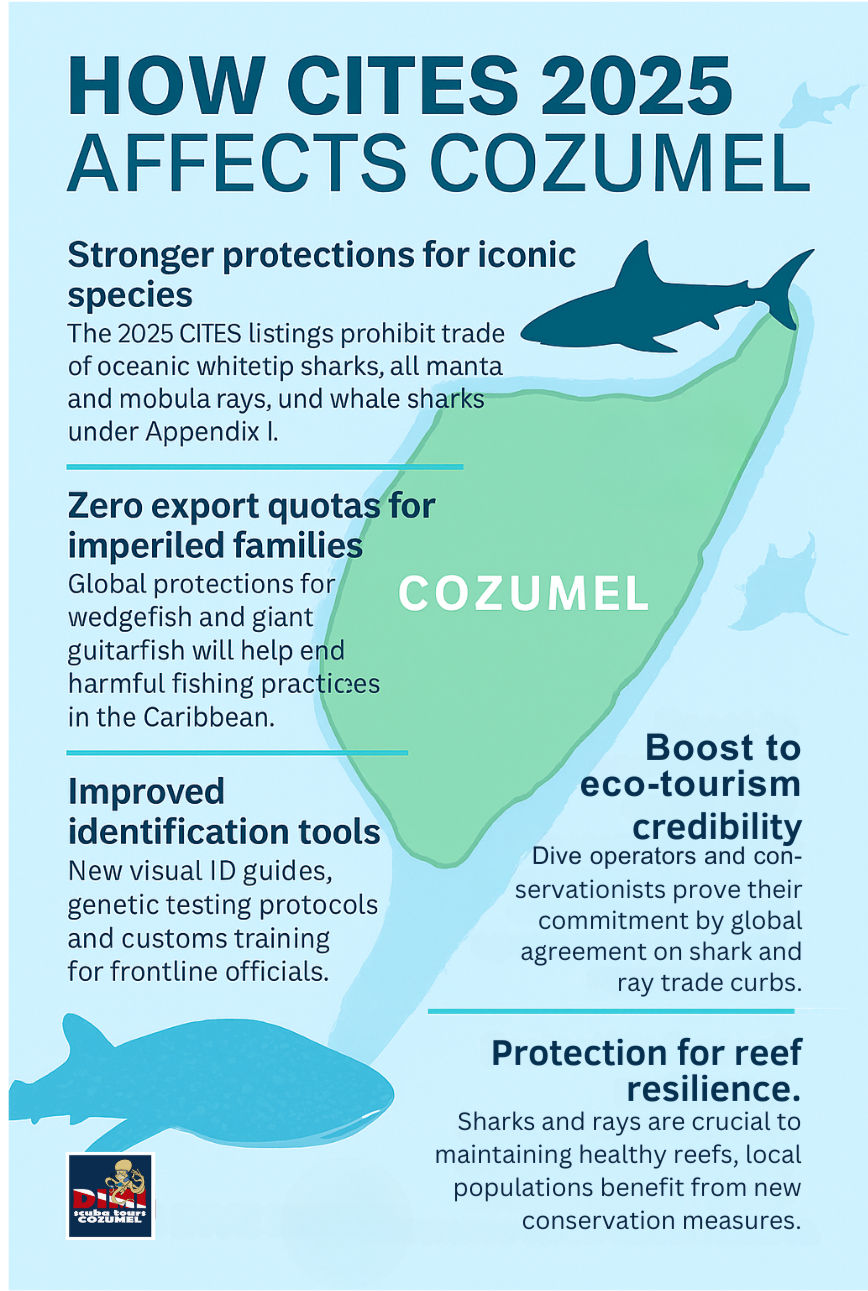
The CITES 2025 Sharks and Rays Proposal strengthens protections for threatened species, which directly supports Cozumel’s marine conservation efforts and eco-tourism economy.
Stronger Protections for Iconic Species
The proposal bans international commercial trade of oceanic whitetip sharks, manta rays, mobula rays, and whale sharks under Appendix I. These species are occasionally spotted in or near Cozumel waters and are vital to its marine biodiversity and dive tourism appeal.
Improved Enforcement and Identification Tools
CITES is rolling out updated visual ID guides, genetic testing protocols, and customs training to help countries like Mexico enforce these listings. This boosts local capacity to monitor trade and protect Cozumel’s marine life.
Boost to Eco-Tourism and Conservation Credibility
Cozumel’s dive operators, conservation groups, and marine park authorities benefit from global alignment on shark and ray protection. These measures reinforce Cozumel’s reputation as a responsible dive destination.
Support for Reef Resilience
Sharks and rays play a critical role in maintaining reef health. Their protection helps stabilize marine ecosystems, which is essential for Cozumel’s coral reefs.
Why It Matters for Cozumel
The CITES 2025 decisions—backed by over 50 governments—represent the most comprehensive shark and ray protections in the convention’s history.
For Cozumel, this means:
Reduced risk of species loss
Enhanced global cooperation
A stronger foundation for sustainable tourism and marine education
How You Can Support Shark & Ray Conservation
In the Water
Education — Take a Sharks & Rays Diving or Snorkeling Conservation Course
Respect protected species — No touching, chasing, or feeding
Log sightings — Share data with local conservation groups and citizen science platforms
Choose ethical operators — Dive with businesses that follow marine park rules and support conservation
In Your Community
Educate others — Share facts about shark and ray roles in reef health
Host awareness events — Talks, or beach cleanups with a conservation theme
Support local initiatives — Volunteer or donate to marine protection programs
On Social Media
Amplify conservation wins — Celebrate updates, protected areas, and success stories
Debunk myths — Sharks aren’t monsters—they’re vital to ocean balance
In Your Purchases
Say no to shark products — Avoid shark fin, cartilage, liver oil, and ray leather
Support sustainable seafood — Choose certified options that don’t harm sharks or rays
Buy from eco-conscious brands — Gear and apparel that give back to ocean causes


Comments